20 Soft Bridal French Tip Nails You’ll Want to Save for Your Big Day
Introduction
Your hands get more attention on a wedding day than almost any other part of the look. They’re in the ring shots, wrapped around the bouquet, lifting a glass, and resting on a dress that’s probably covered in lace or satin. That’s why soft bridal French tip nails remain such a dependable choice. The tips are gentler than a stark white line, the base looks like your own nails on a good day, and the whole set photographs cleanly against nearly any dress color.
The 20 ideas below range from barely-there micro tips to pearl accents, shimmer finishes, and a press-on option for brides doing their own nails. Each one notes the shape, finish, and small details worth showing your nail tech, so you can save the ones you like and walk into your appointment with something specific.
1. Classic Soft White Tips on a Sheer Pink Base
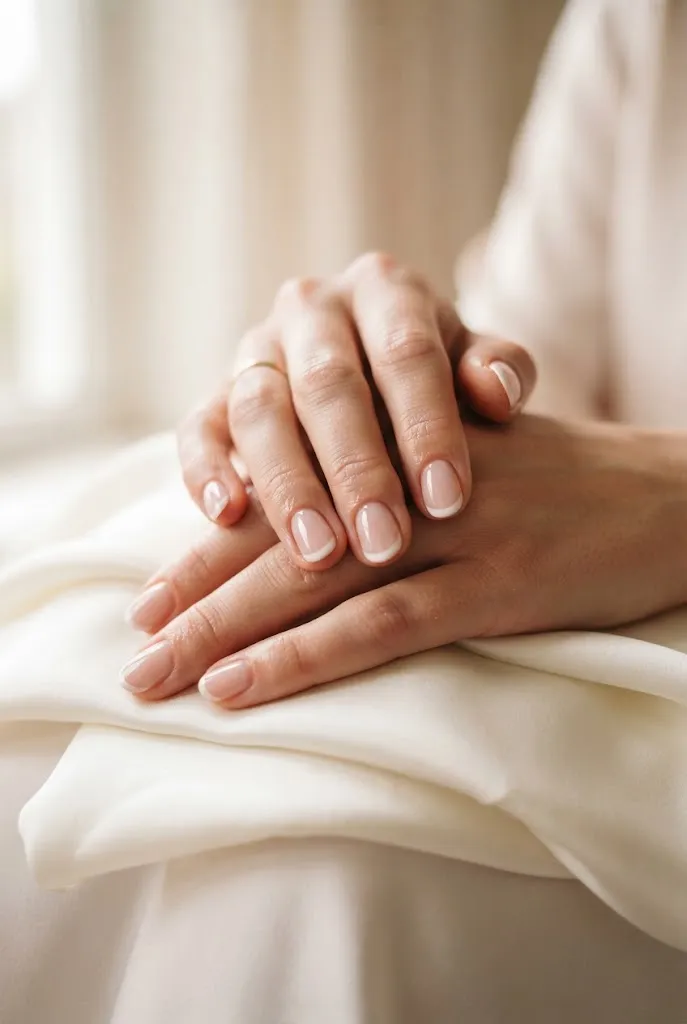
This is the version most people picture when they hear “bridal French.” The difference is in the softness. Instead of an opaque, bright white, the tip is a slightly diffused white with a thin, even smile line, set over a sheer pink or peachy-nude base.
Best For: First-time French wearers and brides who want something that never looks dated
Investment: Accessible to moderate
Visual Effect: Clean, polished, and close to natural
Ask for a “soft white” or “milky white” rather than a stark one. Pure white can read harsh in flash photography, while a touch of softness blends with skin tone in both candid and posed photos.
2. Barely-There Micro French
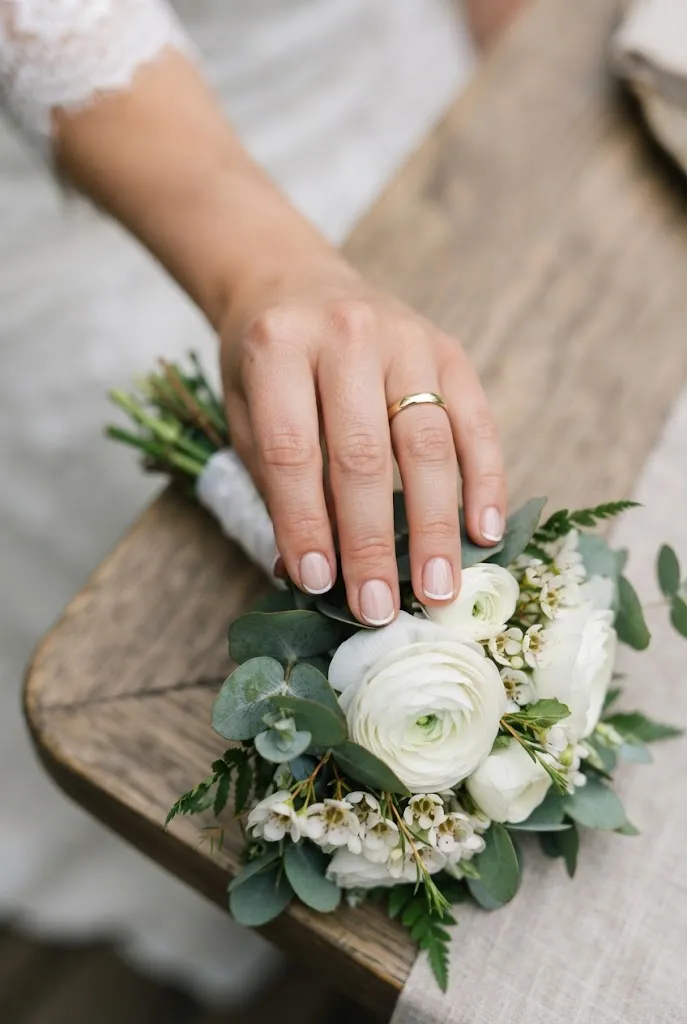
A micro French uses an extremely thin tip line, often only a millimeter or two, so the effect is more of a delicate edge than a visible stripe. It suits brides who want their nails to look polished without announcing themselves.
- Works well on short and medium nails
- Keeps the focus on the ring and bouquet
- Grows out more gracefully than a thick tip, since the line is already slim
- Pairs well with a sheer, glossy base
The trade-off is precision. A line this fine is hard to freehand evenly, so many brides book a technician comfortable with detailed brush work.
3. Milky Ballet-Slipper Almond French
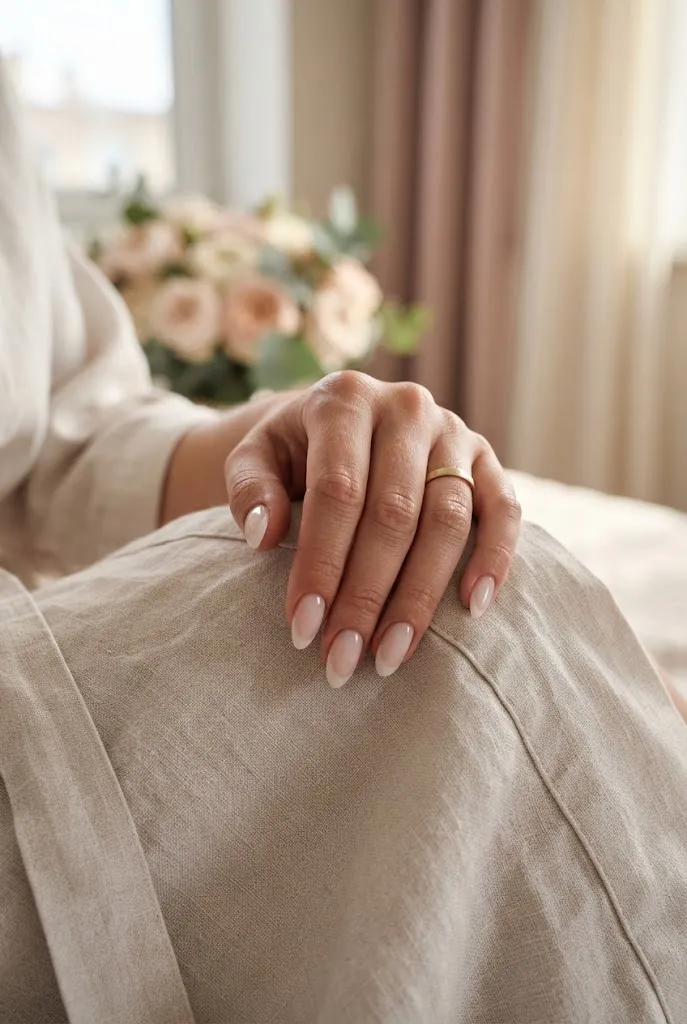
Almond-shaped nails with a milky, translucent pink base create a soft, tapered look that elongates the fingers. The tip sits slightly off-white, almost like frosted glass, so the transition from base to tip is gentle rather than sharp.
In practice, this works best when the nail has a little length to taper. If your natural nails are short, a technician can use extensions or builder gel to create the almond shape. Keep the sidewalls slim and the apex gently centered so the nail looks balanced from every angle.
Editor’s Note: Milky bases can look slightly different under different lighting. Ask to see the shade near a window before it’s sealed, since a base that looks perfect under salon lamps may read cooler in outdoor ceremony light.
4. Champagne Shimmer Tips
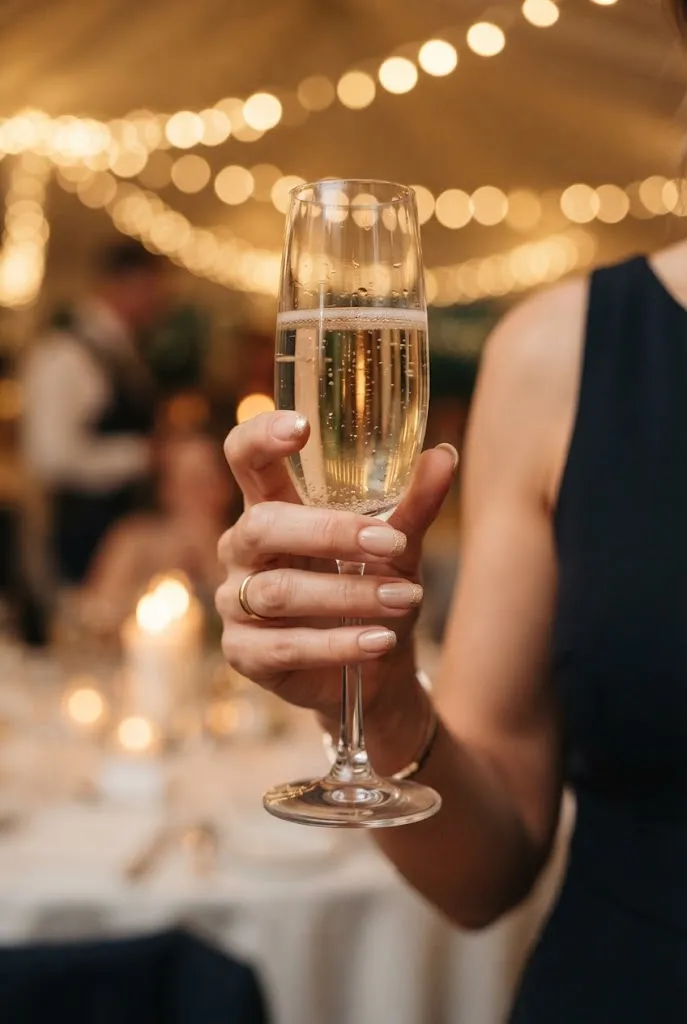
Swap the white tip for a soft champagne shimmer and the French manicure picks up a warmer, glowing quality. The shimmer should be fine and sheer, not chunky glitter, so it catches light without looking festive in the wrong way.
This works nicely for evening receptions, candlelit venues, and brides wearing ivory or warm white gowns rather than stark white. Against an ivory dress, a cool white tip can look slightly gray, while champagne tends to blend in.
| Tip Finish | Effect | Best Fit |
|---|---|---|
| Fine champagne shimmer | Soft glow, subtle sparkle | Evening or indoor receptions |
| Opaque soft white | Crisp, traditional | Daytime or outdoor ceremonies |
5. Pearl Accent on the Ring Finger
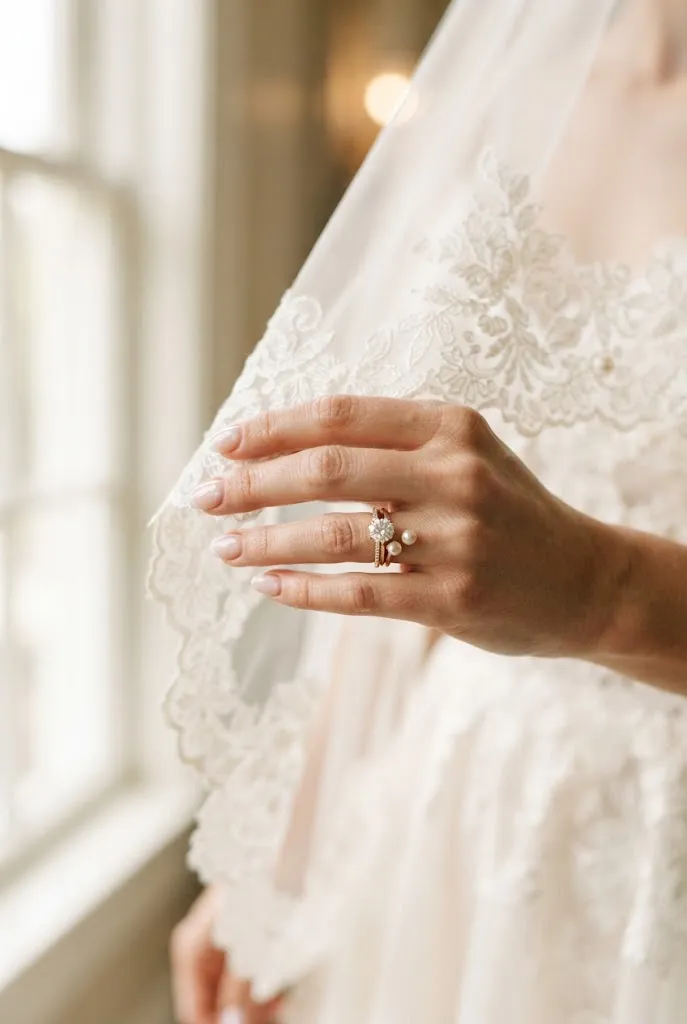
Keep all ten nails in a classic soft French and add one small pearl to the ring finger, set near the cuticle or at the base of the tip line. It’s a quiet way to give the ring finger a bit of ceremony without making the whole set feel decorated.
Use a flat-back, nail-specific pearl and have it sealed with a thin layer of top coat around the edges so it doesn’t catch on hair, veils, or lace. Size matters. A pearl around 2–3 mm usually looks refined; larger ones start to compete with the engagement ring.
6. Soft Ombré French
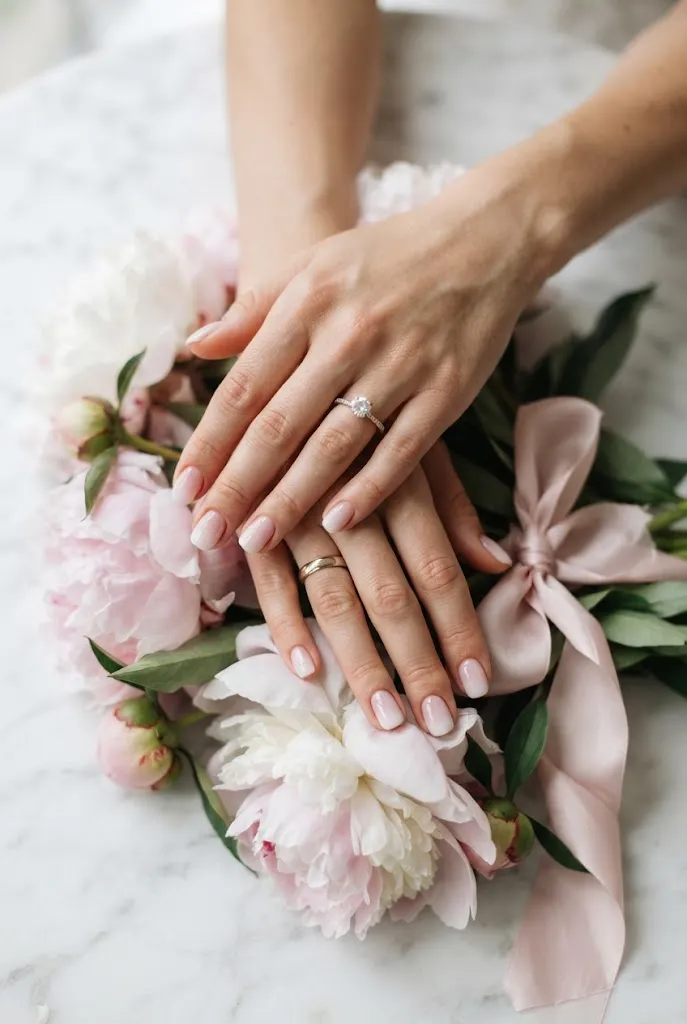
An ombré French blends the base into the tip rather than drawing a clean line. The result is a gradual fade from sheer pink to a soft white, which makes the whole nail look airbrushed. It’s often called a “baby boomer” style, though many nail techs simply describe it as a soft-focus French.
Because there’s no hard line, this style tends to look natural as nails grow, which makes it a practical choice for brides who’ll be growing out a set between their final appointment and the wedding.
- Start with a sheer pink or nude base.
- Add a soft white at the free edge.
- Blend with a sponge or fine brush until the transition disappears.
- Seal with a glossy top coat.
7. Lace-Inspired Hand-Painted Tips
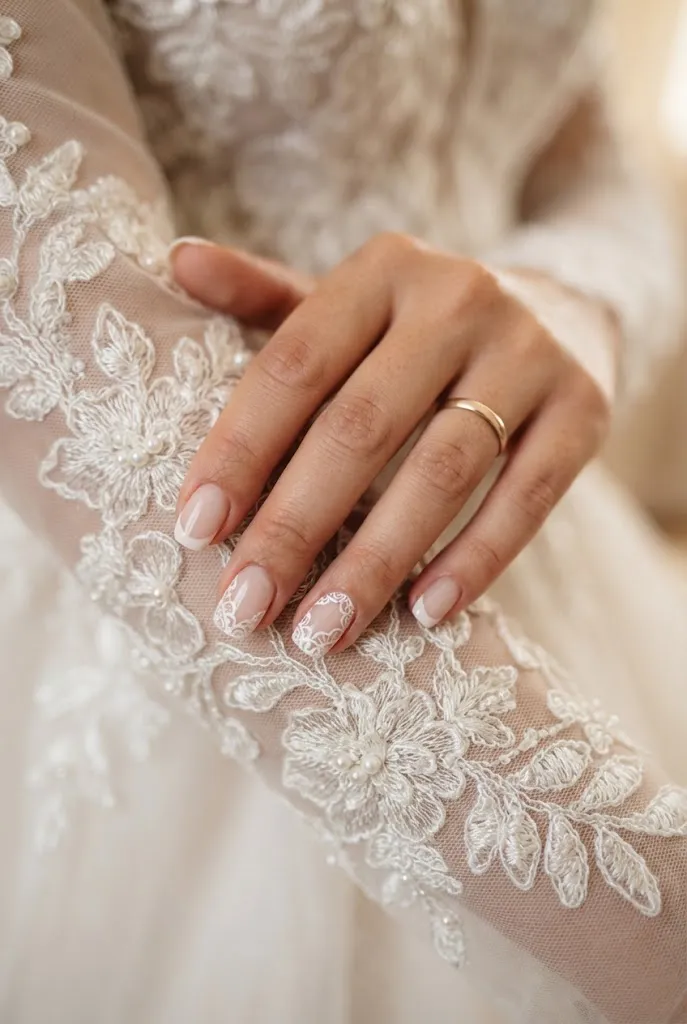
For brides whose dress has lace detailing, a hand-painted lace pattern at the tip can echo the gown without copying it. The key is restraint: fine, sheer white linework along the tip rather than full-nail patterns.
- Works best on a sheer nude or soft pink base
- Looks most delicate on medium or long nails with enough surface area
- Can be limited to two accent nails for a subtler effect
- Needs a technician comfortable with thin brushwork
Common Mistake: Covering every nail with dense lace. It can look busy up close and muddy in photos.
Better Approach: Use lace on one or two nails and keep the rest as a clean soft French so the detail has room to read.
8. Short Squoval Natural French
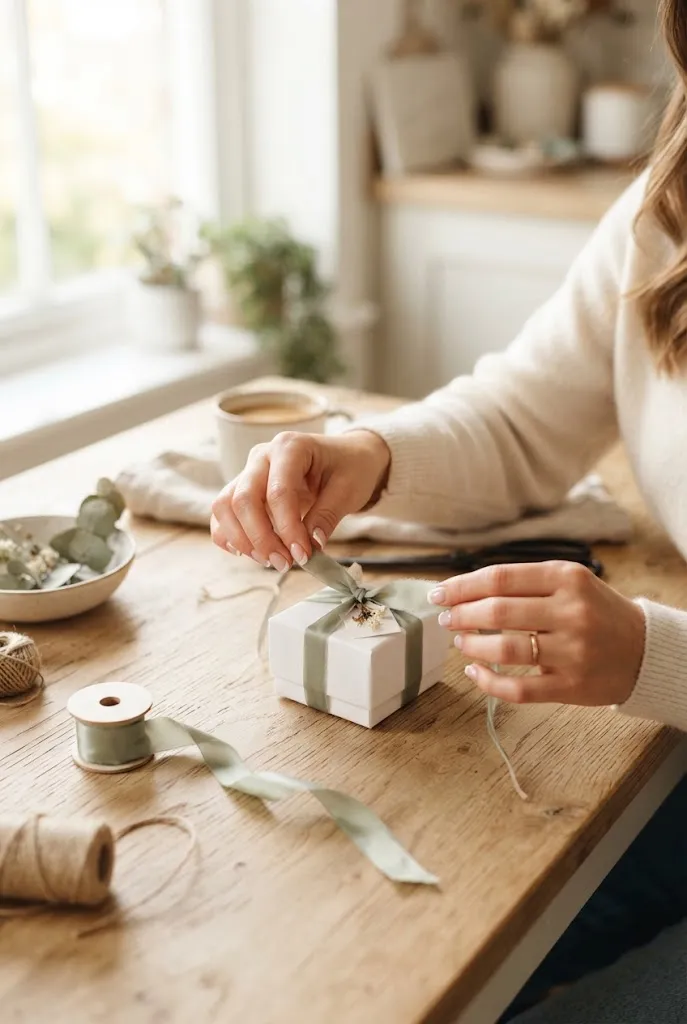
Short nails and French tips are an easy match. A squoval shape, square with softened corners, holds up well to everyday wear and looks tidy without requiring extensions. It’s a smart option for brides who type, cook, work with their hands, or simply prefer natural length.
For short nails, keep the tip line slim and follow the natural curve of the nail edge. A thick tip on a short nail can make it look stubby, while a thin one keeps it proportional.
Quick Tip: If your nail beds are short, ask for the tip line to sit slightly higher on the sides so the nail looks longer through illusion rather than length.
9. Double French With a Fine Second Line
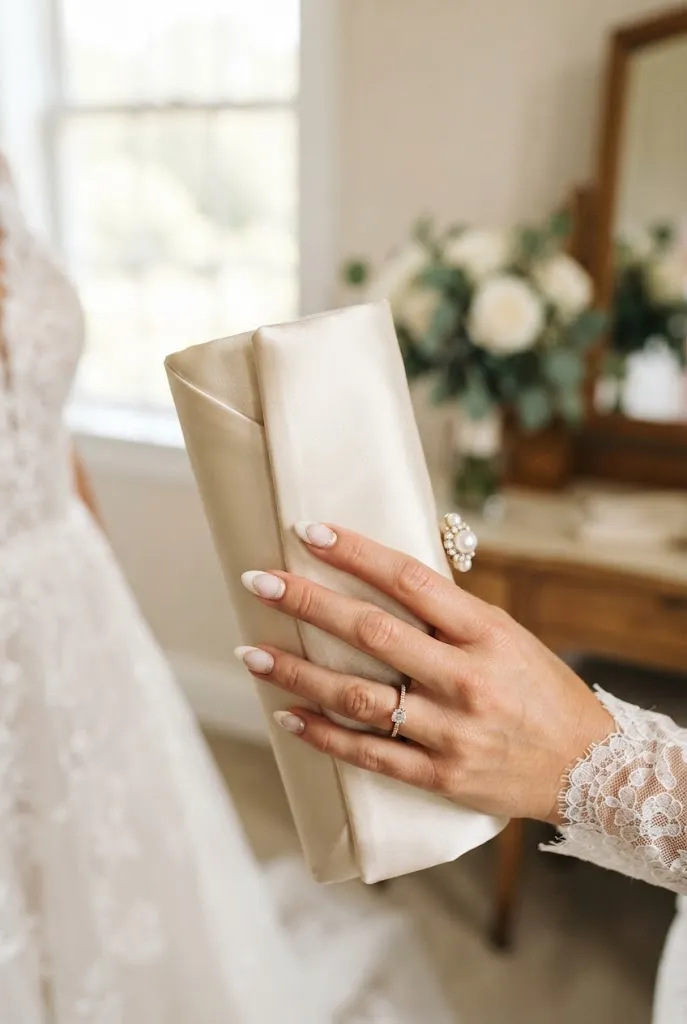
A double French adds a thin second line just beneath the main tip, creating a layered, graphic effect that still feels refined. The two lines can be the same soft white, or the second line can be a pale shimmer or pearl-toned shade for a quiet accent.
This look is slightly more detailed than a classic French, so it benefits from a steady hand and a clear reference photo. Keep the gap between lines even; uneven spacing is the most visible flaw.
10. Blush Pink Tips on a Neutral Base
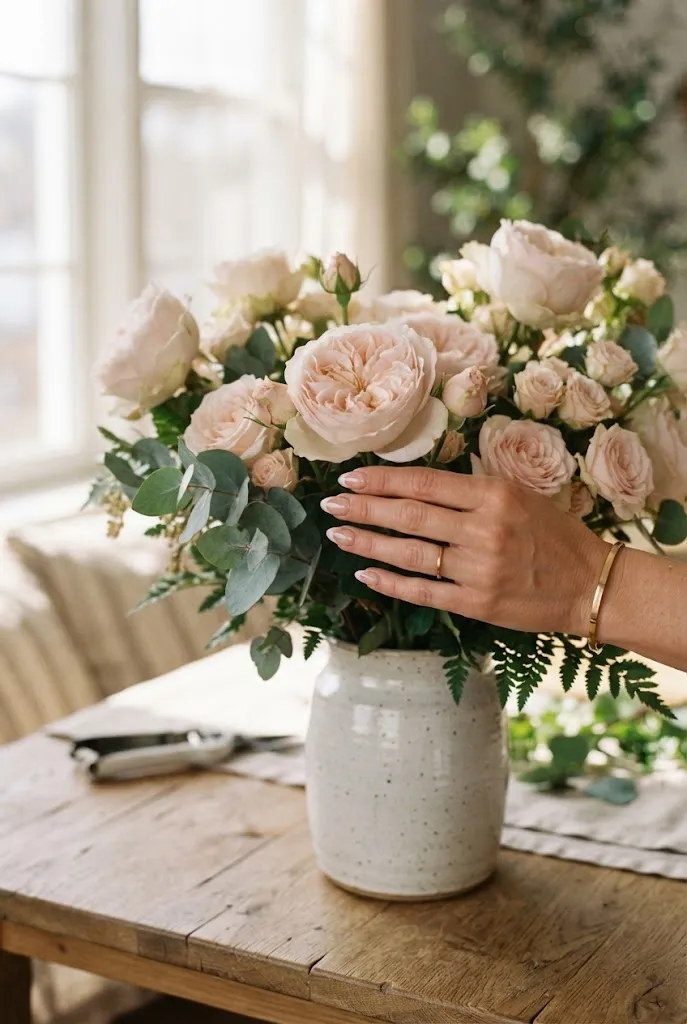
Not every bride wants white tips. A blush pink tip over a sheer nude base keeps the French structure but softens the contrast, which many people find more flattering and easier to wear with warm ivory or blush-toned dresses.
| Base | Tip | Effect |
|---|---|---|
| Sheer peach nude | Soft rose blush | Warm, romantic |
| Sheer pink | Pale blush | Gentle, low contrast |
| Sheer beige | Dusty pink | Muted, vintage-leaning |
Test the tip shade against your bouquet and bridesmaid dresses if the palette includes pinks. A tip that clashes with the florals will stand out in group photos.
11. Something Blue: A Single Pale Blue Tip Accent
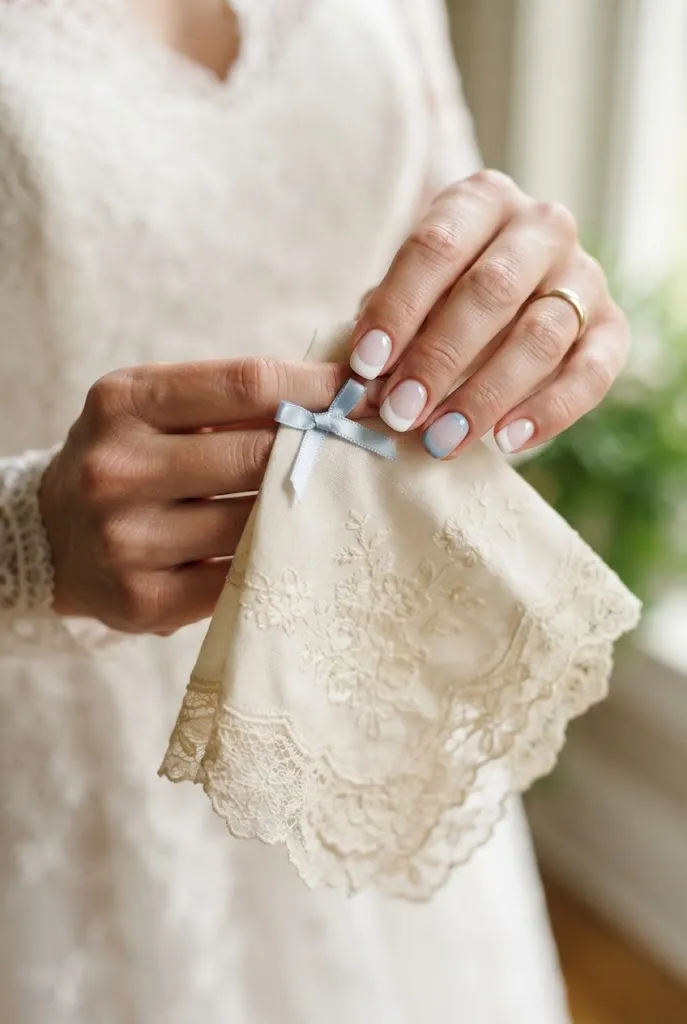
Weddings have a tradition around “something blue,” and nails offer a subtle way to include it. Keep nine nails in a soft French and add one accent nail, often the ring finger or thumb, with a pale, dusty blue tip.
The blue should be muted: powder blue, soft denim, or a gray-blue. A bright cobalt tip would dominate the set. The accent works best when it’s easy to miss at first and charming once noticed.
Best For: Brides who like a small nod to tradition
Investment: Accessible
Visual Effect: Quiet, sentimental, and photo-friendly
12. Reverse French at the Cuticle

A reverse French, sometimes called a half-moon or “negative space” style, flips the placement of the accent so the curve appears at the base of the nail near the cuticle. In a bridal version, it’s drawn in soft white or pearl over a sheer base.
It reads more modern than a traditional tip and pairs well with minimalist dresses and clean, contemporary venues. It can also be paired with a standard tip for a “double-ended” effect.
The practical consideration is regrowth. Because the design sits close to the cuticle, it starts showing growth sooner, so timing the appointment close to the wedding date helps
13. Micro Crystal Cuticle Line
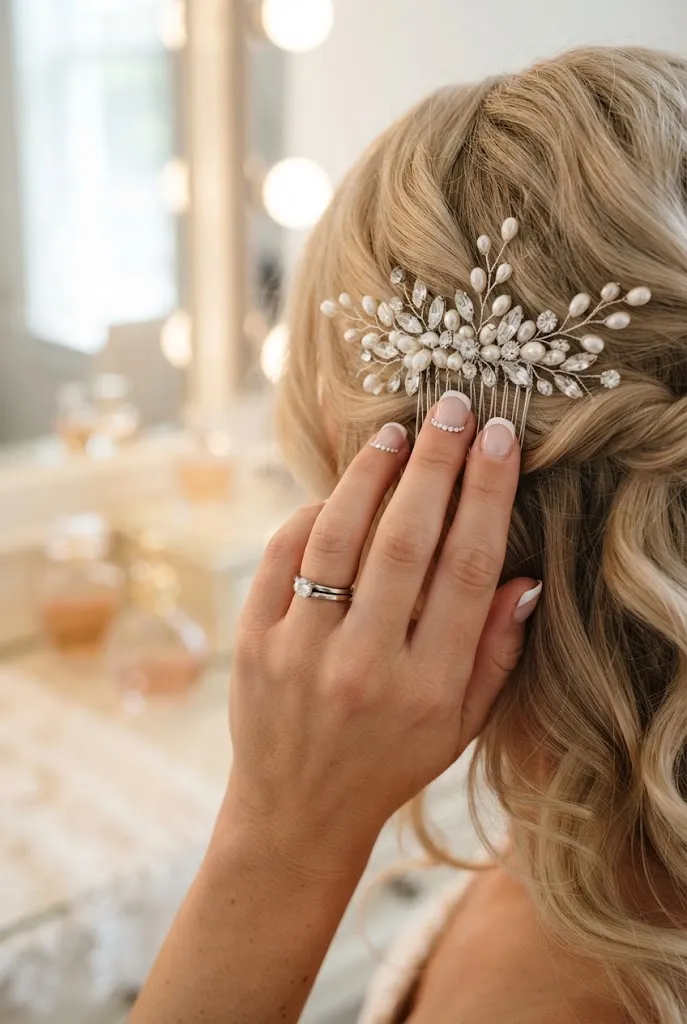
A fine line of tiny crystals or micro rhinestones along the cuticle, paired with a soft French tip, adds light without changing the overall feel. The crystals should be small and spaced neatly so they catch the light at certain angles rather than glaring.
- Choose clear or pearl-toned crystals to keep the look soft
- Limit the detailing to one or two nails if you prefer subtlety
- Ask for secure application with a gel layer, as stones near the cuticle can catch on veil tulle or hair
Editor’s Note: Embellishments near the cuticle can feel noticeable when you’re typing or washing your hands, so test-wear them during the trial if possible.
14. Soft Gold Foil Tips
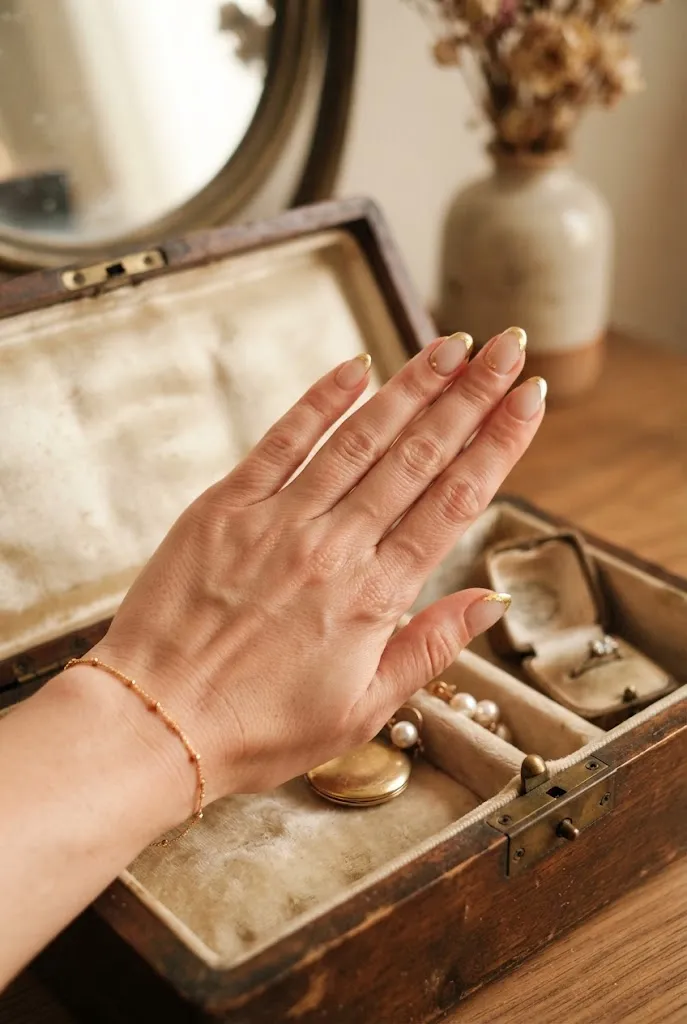
A thin flake of gold foil laid along the tip, rather than a solid line of color, gives a French manicure a little warmth and texture. The foil appears broken and organic, not uniform, so it feels like a detail rather than a pattern.
Gold foil pairs naturally with ivory gowns, warm-toned jewelry, and fall or winter weddings. For a more subtle effect, use pale champagne foil instead of yellow gold, and apply it sparingly so it doesn’t overpower the nude base.
15. Long Soft Ivory Almond French
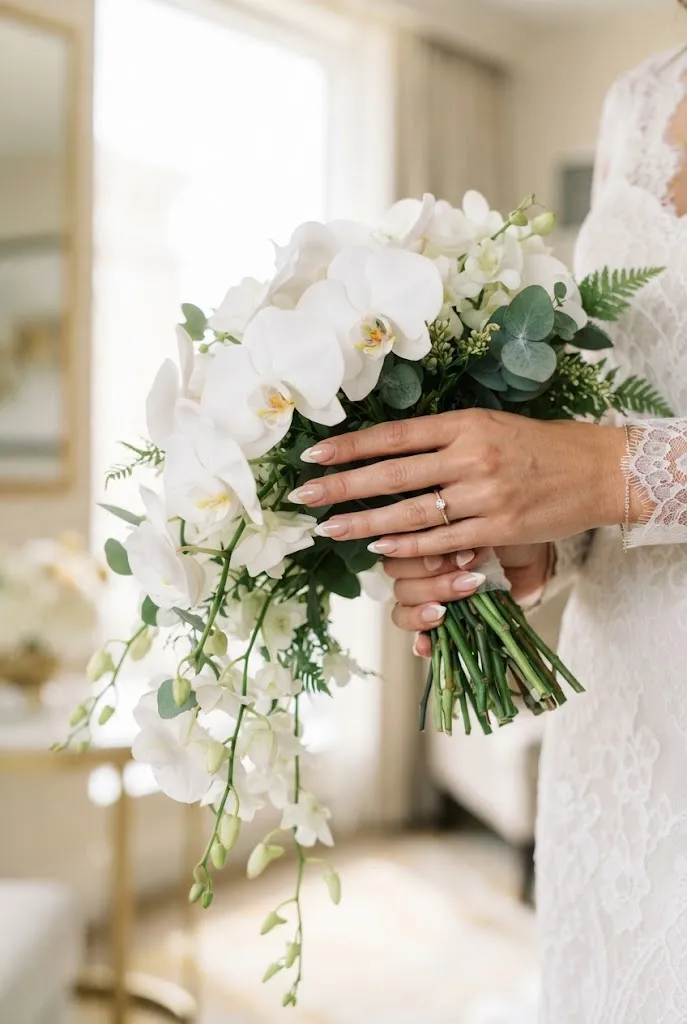
For brides who love length, a long almond set with ivory tips feels elegant rather than dramatic when the proportions are right. Ivory tips are slightly warmer than stark white, which tends to complement natural skin tones and lace details.
Length does require planning. Most brides who choose this look use extensions or builder gel, so it helps to practice handling dress zippers, veils, and bouquet stems with that length during the trial. Keep the shape slim and the apex centered for balance.
Quick Facts
Best For: Brides comfortable with longer nails
Investment: Moderate to premium
Visual Effect: Elongated, graceful, and polished
16. Satin Velvet Cat-Eye Tips
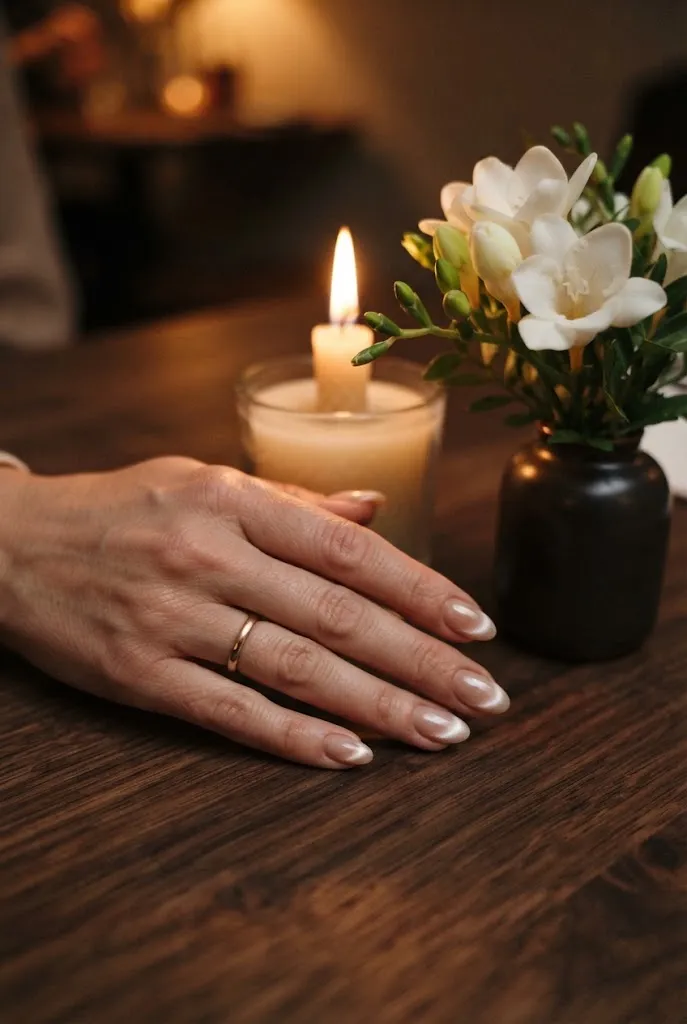
A magnetic cat-eye finish creates a soft, light-catching band that shifts as the hand moves. In a bridal palette, think pearl, champagne, or pale rose rather than bold metallics. The effect is subtle in still photos and more noticeable in motion.
Keep the base sheer and the tip line gentle, letting the shimmer do the work. This finish is best done by a technician experienced with magnetic polishes, since placement affects how the sheen sits on the nail.
17. Baby’s Breath and Tiny Floral Detail
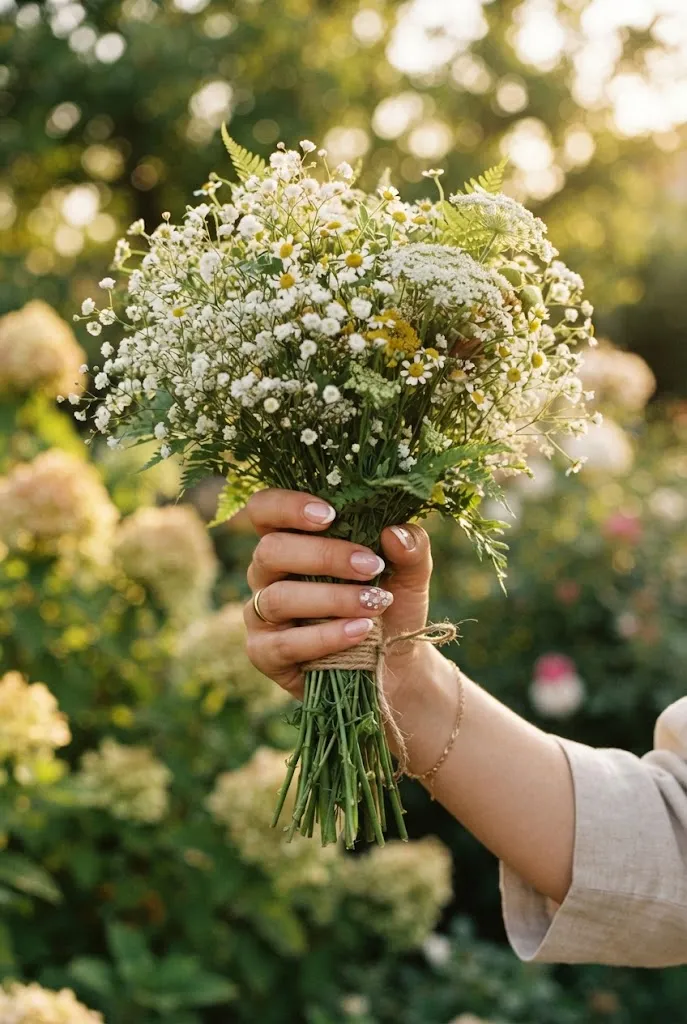
A tiny hand-painted floral accent, such as a few white baby’s breath blooms or a single small flower near the tip, adds a romantic touch to a soft French. Keep the florals fine and sparse, and place them on one or two nails so the set still reads as a French manicure.
This pairs especially well with garden, rustic, and outdoor weddings, and it can echo the actual florals in the bouquet. Share a photo of your flowers with your nail tech so the detail feels connected.
18. Soft Coffin French With a Gentle Curve

Coffin nails, tapered with a flat tip, can feel too bold for some brides, but softened versions work well for a French manicure. Rounding the corners slightly and keeping the tip line gently curved creates a modern, delicate look.
Opt for a sheer base and a soft white or pale ivory tip. The flat edge gives a clean canvas that photographs well in close-ups, especially for ring and bouquet shots.
Do: Keep the taper gentle and the edges softly rounded.
Don’t: Choose an extreme taper with a very thick tip line, which can look heavy.
19. Press-On French Tips for the DIY Bride
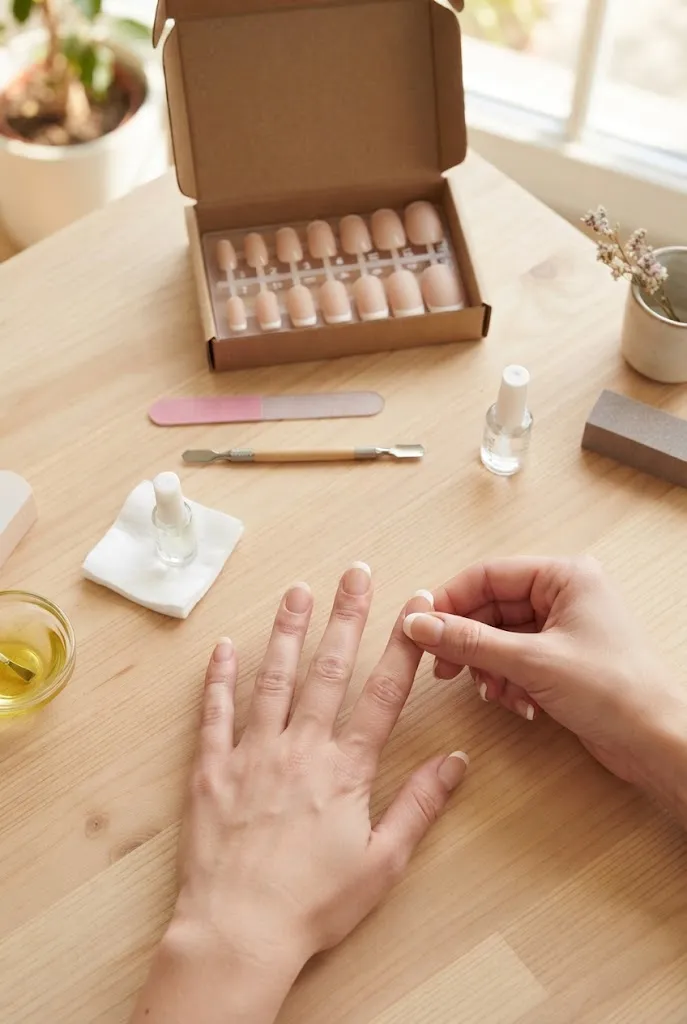
Not every bride books a salon set, and press-ons have improved considerably. A good set of soft French press-ons can look polished, cost less than a salon service, and be applied at home.
- Choose a size set that fits each nail without overlapping the sidewalls.
- Prep by gently pushing back cuticles, buffing the surface lightly, and wiping nails clean.
- Apply nail glue or adhesive tabs to the press-on and press firmly from the cuticle outward.
- File the shape if needed and seal the edges with a thin layer of top coat if the product allows.
Do a trial run well before the wedding so you know the fit and timing. Remove them gently, following the product’s instructions, to avoid damaging natural nails.
Best For: Budget-conscious brides, bridesmaids, and guests
Investment: Accessible
20. Glazed Pearl Chrome French
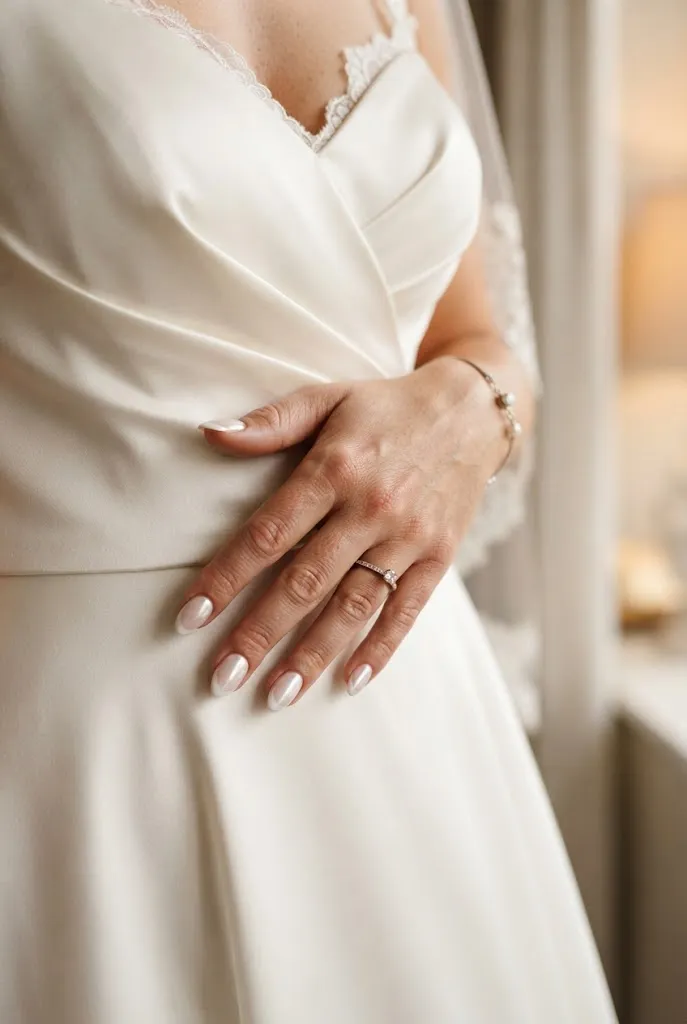
A glazed pearl finish uses a fine chrome powder over a sheer base to create a soft, milky shimmer that looks pearlescent rather than metallic. Add a pale French tip, or let the glaze define the tip area, for a look that shifts gently in changing light.
It’s a modern option that still feels bridal, particularly with satin, crepe, or minimalist gowns. Keep the chrome subtle by asking for a “pearl” or “opal” effect, not a mirror finish, so it blends with ivory and white outfits.
Editor’s Note: Chrome finishes can look different outdoors and indoors, so look at the set in natural light before you leave the salon.
Planning Your Wedding Manicure Timeline
Good bridal nails are partly about design and partly about scheduling. A rough plan can reduce last-minute stress:
- Book a trial. Many brides schedule a test manicure a few weeks before the wedding to try shape, shade, and finish, and to take photos in different lighting.
- Bring references. Save a few images, including your dress details and bouquet, so your nail tech sees the full picture.
- Schedule the final set close to the date. A day or two before the wedding usually keeps the set looking fresh, though your technician can advise based on the product used.
- Pack a small kit. A file, clear top coat, and spare press-on or accent nail can help with surprises.
Ask your nail tech about expected wear time and safe removal for the specific product you choose, since that varies by method.
Choosing Your Starting Point
If you’re not sure where to begin, start with your dress and your hands. A lace gown suggests ideas 7 or 17, a satin or minimalist dress pairs well with 2, 12, or 20, and a warm ivory gown often looks good with 4, 14, or 15. Short natural nails lean toward 8 and 10, while brides open to extensions can consider 3, 15, or 18.
Save two or three that appeal to you, bring them to your trial, and let your nail tech adjust shape and shade to your hands. A soft French is flexible, so small tweaks usually go a long way.